

Wallace Rangel
Sunday, July 27, 2025
Keywords: HSS framework, gaming science, professionalism, trustworthy, competence
Introduction
Difference Between Morality, Ethics, and Law
There are decisions that every person makes that are great, but they can also be extremely horrible, as they affect their lifestyle due to their morality, behaviour, and beliefs (Desai and Kapadia, 2022). The choices we make have consequences, and we are responsible for facing them. It can also have a long-lasting impact as we create progress throughout our lives. Law is enforced upon and controls external behaviour. Individuals must be cautious of the choices they make, as it can result in imprisonment for a specified period, depending on the nature of the crime committed.
Gaming science innovations
Gaming has been around for a decade, and throughout civilized history, it has changed how the human mind works. Individuals who play games are likely to improve their mindset by understanding the game’s logic, resulting in more cognitive behaviour. The brain adapts to new ways of thinking. It allows the individual to see things from a different perspective when learning about the character’s story or understanding how the story’s foundation ties together with the progression of the game and heavily impacts every decision they make. Gaming fosters critical thinking, enabling individuals to rationalize the resources they gather and utilize them to build structures and weapons as they progress through the story. Individuals must be cautious with the choices they make, as it can affect their relationships with other characters as well. Studies have shown that the way games have an impact on the individual’s well-being essentially develops history through civilizing confirmation that relates to the field of gaming, which can be established earlier on a deeper level of how matches that individuals play, such as chess, contribute to the war of more knowledge as to how people that enjoy gaming have the opportunity to lie to defend themselves. By employing critical thinking strategies and competencies, the likelihood of being coerced by the enemy into making threats should be minimized (White, Lewis, and McCoy, 2018). Policies are put in place to prevent threats from occurring to any individual and to ensure that employees are following the company’s procedures and protocol to make the workplace environment safe for everyone. However, individuals who fail to follow a company’s policy and threaten employees sexually or commit sexual assault or any category of crime are given a sentence by the judge. In non-gaming settings, several components are implemented that influence game designers to plan the game’s foundation uniquely by utilizing specific details. This structure involves applying gamification (White, Lewis, and McCoy, 2018). The game structure is built by game developers and designers using various software programs and applications to apply computer code directly to the game. Game developers are responsible for coding software programs to ensure they are immediately applicable to games, creating software that contains numerous codes involving game fixtures. Some issues require thoughtful consideration of the elemental procedure to identify what should be considered before addressing concerns related to gamification or ideas (White, Lewis, and McCoy, 2018). This allows game developers to ensure the game runs smoothly, thereby enabling companies to make a profit and build their organization’s reputation and fan base. GSIs offer the promise of safe environments for practice, attainment, assessment, and refinement of skills essential to achieving real-life outcomes. Employees, as well as individuals, enhance their critical thinking skills when gaming to understand how other game characters relate to the main story. They learn different ways to understand other perceptions of game characters that are applicable in the game when they are given choices to make. The choices they make can have a significant impact on how the game ends, leaving them wondering what would have happened if they had chosen this instead of that. Game developers incorporate decision-making choices to enable gamers to make informed decisions and enhance their critical thinking skills when faced with relationship issues or complex situations, such as bank robbery, where they must devise individual or collaborative strategies to complete the mission without harming NPCs. Players engage with one another to communicate effectively and accomplish the tasks.
HSS framework
In the Medical Education Consortium, the American Medical Association conducts semiannual work to improve the field, enabling individuals to be trained in implementing acceleration towards changing the way publication is conducted at HSS (White, Lewis, and McCoy, 2018). Medical students face numerous challenges and seek innovative ways to enhance the medical field, aiming to establish an outstanding structure by uncovering new diseases and utilizing advanced medical technology to analyze patients’ conditions that may require specialized treatment. Certain diseases spread easily and can be challenging to detect if not interpreted correctly, weakening the patient’s body and causing reduced mobility, confusion, and other symptoms that require immediate attention from doctors. Surgeons perform surgical procedures to treat conditions such as cancer that are highly aggressive. However, even with chemo, the chances of the patient surviving and being cured from the condition are likely moderate. Depending on the diagnosed condition, it results in a shorter lifespan. In medical education, medical practitioners are examining a process to evaluate the requirements for implementing advanced changes within the Consortium. Numerous people, as well as the economy, will be impacted by the increasing number of patients requiring specialized care, which will necessitate the availability of advanced equipment to physicians (White, Lewis, and McCoy, 2018). Equipment will be advanced, and policies will be updated to maintain good hospital conditions. A lack of proper policies and standard procedures results in unproductivity and gives the hospital a bad reputation, as employees refuse to work in unsafe environments without hazardous alerts. In groups that are collaborating to achieve goals, demonstrating techniques to employees on how they can begin working on improving the condition, as well as the things that are valuable to society grants the possibility of delivering numerous patient roles that are inhabiting the central medical assistance to provide effective working methods for which is commonly studied by the HSS to understand how it is conceptualized (White, Lewis, and McCoy, 2018). They provide evaluations for patients undergoing surgery. Rationalizing effective surgical methods benefits surgical residents by enabling them to deliver more surgical procedures when needed, thereby improving the quality of their surgical evaluations. The way that things can slowly start developing better development towards a safer environment typically have to be taken into consideration by the government that has control of the city that is populated in which they provide care for the patient role and can experiment by working with numerous suppliers to figure out a solution that can be beneficial for the people who are working there. The outline of the Quadruple Aim is aligned with the HSS (White, Lewis, and McCoy, 2018). They provide suppliers to the government by collaborating with them to implement ways to improve economic healthcare. They determined the most effective way to collaborate with HSS. Studies show that by providing ways to deal with the setbacks, which usually happen with the administration as well as the issues that occur in society, individuals who have a serious medical condition will be evaluated physically by doctors to understand better how the consequences usually begin affecting the healthcare that has a broader point of view that is not always analyzed correctly will indicate a viewing broadscale which will be used to demonstrate newer technology that the HSS will study (White, Lewis, and McCoy, 2018). This will ensure that technology continues to advance in the medical industry. At the same time, doctors, nurses, and surgical residents must carefully monitor the situation to ensure that everything is proceeding according to plan and adjust their approach accordingly, given the circumstances. There are numerous ways that the HSS can analyze the information provided to determine the best course of action, ensuring that the patient’s roles, as well as the economy they support, have the necessary tools to assess their suppliers’ capabilities in implementing improvements. One way is if the HSS decides to expand their knowledge (White, Lewis, and McCoy, 2018). By increasing their understanding of the patient’s care, medical practitioners can evaluate the patient’s diagnosed conditions and proceed with the standard protocol, providing them with the better treatment they need. This will enable team members to establish the standard protocol for diagnosing and evaluating patients with the current condition. HSS integration into medical education and practice is not without challenges. Doctors, nurses and surgical residents make mistakes when performing open heart surgery or any surgery on patients and sometimes that results in patients dying if left without observation after and before surgery. That is why doctors need to evaluate the patient correctly so that if any individual has a heart attack or seizures, they can be treated immediately. Medical educators have been tasked with developing and integrating new content into an already heavy curricular load. They need to treat patients immediately. If they fail to treat patients correctly, doctors can lose their license and possibly face court proceedings, resulting in a jail sentence being imposed by the jurisdiction. Within a framework that incorporates substantial evidence from Engel’s biopsychosocial model, many of the established theories have been demonstrated to influence the way people think. The HSS fundamentally establishes it (White, Lewis, and McCoy, 2018). They control how people think to help the government influence better actions. This does not guarantee a stable environment for the hospital. In a biopsychosocial pyramid, the HSS studies the information that contains elemental interdependency, focusing all conceptualizations on the effort that is framed (White, Lewis, and McCoy, 2018). They indicate the best solutions to implement to reduce the possibility of errors in the economic system. In a hierarchy, arrangements are put in place to help span the information that is being used biologically and psychologically, as well as to understand what goes on in the environment, to implement a modelled framework by the HSS to improve life sociologically (White, Lewis, and McCoy, 2018). This helps them understand what is happening in the social world, so they can tackle objectives quickly while maintaining the completion of work being done in the environment. Learners will understand how to address the various factors that influence health and well-being. They will stay up to date with the latest developments in the medical field to help ensure that relevant implementations are made in the economy, so that people remain informed about current events. The spheres used to help the HSS indicate six core areas and five cross-cutting areas, linking the systemic database and facilitating reasoning to consolidate information in one place. They include:
Core domains
- Health care structures and processes
- Health care policy, economics, and management
- Clinical Informatics and health information technology
- Population health
- Value-based care
- Health system improvement
Cross-cutting domains
- Leadership and changing agency
- Teamwork and interprofessional education
- Evidence-based medicine and practice
- Professionalism and ethics
- Scholarship
Core domain: health care structures and processes
There are numerous ways that the medical field can be utilized to implement changes that deliver better support conditions for patients, ensuring their needs are satisfied so that they can interact more effectively with the staff. Having practical communication skills ensures that medical patients are not being overlooked by the wider environment, which can have a negative impact (White, Lewis, and McCoy, 2018). They must be sifted through before a conclusion is reached, so that the appropriate treatment can be provided for all patients staying in the medical facility or requiring special treatment. In some cases, doctors fail to review a patient’s medical history before making a diagnosis, which can result in incorrect treatment. Many organizations that collaborate with various public entities possess a strong area of expertise, as well as an understanding of the importance of promoting informative messages, helping people understand how they can maintain their well-being by utilizing these domains (White, Lewis, and McCoy, 2018). They will have more substantial knowledge of what to do and what not to do in their daily lives, which will help them take better care of themselves. Training games set in a virtual world or virtual reality are cognitively engaging because they allow trainees to construct new knowledge through mediated immersion. They will know how to engage in scenarios by thinking carefully about the decisions they make, as it can impact their character’s story, meaning that if an individual is playing the game and they are asked to give responses back to the other characters, the choice they make affects or improves their relationship with the other characters as they walk through the game. The techniques that HSS uses to create an effective report may contribute to providing a software policy that guides employees in teaching medical students working in the healthcare system and demonstrates gamification at the Envision Community Health Center. Some foundations and tools initiate the processing of information within the system, occasionally emphasizing procedures to maintain a specialized system that integrates with the healthcare system (White, Lewis, and McCoy, 2018). Employees will gather the most important information before proceeding and making changes that may have been assigned to them by doctors or nurses on shift to prevent patients who require immediate attention. Their behaviour or opinions are likely to be influenced by others. This results in a higher likelihood of conflict occurring in the workplace, which increases stress for residential surgeons and may impact their overall performance during surgical procedures. For instance, if individuals refuse or choose not to prioritize their well-being, their performance decreases, and they do not remain productive, as they have developed a mindset that self-care is not crucial to their daily lives. Additionally, medical students complete 26 community-oriented primary care cases involving 10 patient families from diverse ethnic backgrounds. They study how families interact with one another when dealing with life problems to understand better how performance can lead to reduced interaction in the workplace. Surgeons must advance in the medical field to integrate new components and techniques that utilize surgical residents’ performances to understand how each resident performs under pressure and requires supervision. First and second-year medical students become oriented with patients, teams, resources, care structures, and processes of Federally Qualified CHCs as they practice care in these settings. They are required to examine any unsafe protocols and surgical procedures and then inform the consultant surgeon of an alternative solution to the problem. Medical students dedicate extensive time to studying the human body, understanding its functions, and recognizing how diseases can impact an individual’s ability to live a healthy life, which is crucial for treating patients effectively before becoming a surgical resident in any medical Centre. According to Federally Qualified CHCs, gamification is integrated into the medical system to assess whether consultant surgeons or surgical residents are effectively examining patients who require care, thereby studying advanced procedure methods that lead to less risky outcomes in practice (White, Lewis, and McCoy, 2018). Practicing the necessary surgical procedures and techniques will increase the chances for surgical residents to make mistakes and gain new insights on how to improve by receiving feedback from other residents or consultant surgeons. Virtual reality training with endoscopic simulators provides learners with the opportunity to practice new procedures and refine their skills before applying them in patient care. Patients are evaluated using medical equipment that examines various body parts and conditions to determine the most appropriate medical treatment based on their current condition.
Core domain: health care policy, economics, and management
This domain encompasses the components of value, cost, and quality. Each element holds a distinct value that determines the essential equipment and changes required to provide a fundamental layout of the organizational structure that needs to be updated. Students further evaluate how these factors influence consumer and provider behaviour, systems, and health outcomes. They find ways to enhance the company’s layout, ensuring that patients receive high-quality care, including access to necessary equipment and doctors for treatment. While doctors are responsible for treating patients, workplace safety procedures should be implemented to help minimize hazardous conditions. In larger groups that primarily focus on providing education to create engagement with individuals, a lot of the individuals’ reaction is closely observed by other members of the team who are responding to the crowd and discussing issues about the GSIs to uniquely determine accurate information that is implemented inside the organization to create a systemic approach that is fundamentally lectured (White, Lewis, and McCoy, 2018). Although individuals have the opportunity to select the choices they make, the required procedures are put in place and not be stepped on to figure out if the determination that is being used to answer the ideas that are being optimized to have situations make presentations for students to figure what they can do next (White, Lewis, and McCoy, 2018). It enables productivity in the work environment. In education, students engage in participation to identify sepsis as well as public guidelines that tie together with the assumption of how resources can be managed to enable clinicians to establish them to put together a movement widely across the province to use gamification that was studied by the British Columbia Patient Safety & Quality Council (BCPSQC). Many of them were not implemented due to economic factors imposed by the government. During the 150 days of the global movement, approximately 150 people were rescued from the sepsis segment, as shown on the screen (White, Lewis, and McCoy, 2018). Many of them were injured or killed. After the movement ended, individuals lacked the integrity to prevent materials that could compromise sustainability from being assembled. British Columbia announced that the movement was related to people developing sepsis (White, Lewis, and McCoy, 2018). Most of them were not sent to the hospital right away and died. There were lots of people managing the movement to make sure that situations were running efficiently, so the basics of the game were bringing small changes that needed to be talked about to understand how individuals behave to comply with the organizational procedure, to create a constructive movement, and to be equipped with the usage of information that is built in. The tools that BSCPSQC owns have been extrinsically used to provide attribution (White, Lewis, and McCoy, 2018). They have an impact on how employees and medical residents interact with each other. In the UK, students are responsible for managing patients in crises who are attempting suicide to prevent suicide from happening by providing strategies to them that are effectively known to help individuals to assist themselves frequently. They are required to follow this as well as be medicated appropriately to avoid mistakes in decreasing self-harm in dangerous places. Studies have shown that undergraduates who fail to follow therapeutic protocols are more likely to perform significantly worse when analyzing simulated events related to gamification (White, Lewis, and McCoy, 2018). This reduces their ability to focus on key details when working with group members to inspect any hazardous materials that pose a danger to the work environment. By reducing medical errors, victims are more likely to be held accountable and work towards their milestones, as the number of hospital doctors increases (White, Lewis, and McCoy, 2018). They will be more productive when assigned structured goals for patients to achieve during their hospital stay. This enhances the hospital’s reputation by providing care to patients who need it.
Core domain: value-based care
Many citizens, as well as the medical doctors who provide physical treatment to patients, are starting to recognize how valuable it is to demonstrate sympathetic techniques that contribute valuable effectiveness when treating critical conditions of residential patients and undergraduates, to be prepared for the newer technology that will need to be approached (White, Lewis, and McCoy, 2018). A software highly known for serving military veterans to assist in managing illness, Health eRide: Your Journey to Managing Pain, was invented to illustrate how things can be measured by making fitness a priority to reduce awful emotions, commonly done by creating assessments for them. Often, it is done by unique gamification (White, Lewis, and McCoy, 2018). Scientists then determine the crucial step in evaluating their performance to identify if changes are needed for their overall well-being. This lowers their blood pressure and decreases the possibility of extreme death rates. Scotland, a country undergoing modernization to implement one of the most extensive procedures, demonstrates how individuals can control their valuable identity to continue developing ways to grow throughout adolescence by expanding the ways the Scottish Health Service implements procedures in collaboration with the IHI to establish standard protocols continually (White, Lewis, and McCoy, 2018). They determine what works and what does not by evaluating individuals who reside or work in the hospital to identify areas that need improvement.
Professionalism
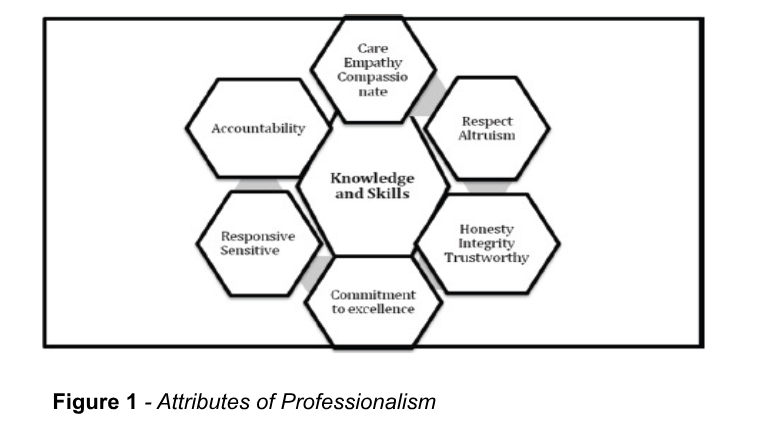
Professionalism symbolizes the relationship and commitment of the medical profession (including doctors) to society, as it forms the basis of patient–physician trust. Doctors and nurses must be able to communicate effectively with patients to gain an understanding of how to proceed with surgical procedures without putting the patient’s life at risk, even when it involves risk. It encompasses multiple emotional and humanistic virtues to deliver the highest quality healthcare services. Although surgeons are experts at performing surgical procedures, they must first evaluate the patient’s medical history to determine the best course of action. They sometimes make mistakes when working under pressure because they cannot think clearly. This results in patients dying as they are left with no observation by other doctors working their shift. Professionalism is defined as the “habitual and judicious use of communication, knowledge, technical skills, clinical reasoning, emotion, values and reflections in daily practice for the benefit of the individual and community. It enables people to connect and form a lasting bond that can last a lifetime. Professionalism emphasizes both humanistic aspects (attitude, behaviour, virtues, and characteristics) and desirable traits among medical professionals in all circumstances, in addition to biomedical elements (knowledge, clinical reasoning, and technical skill).
Norm activation theory
Many things contain respected information, which helps people understand how to display productivity by staying committed to the work they enjoy or build a lifestyle by reflecting on personalized norms (Yazdanmehr and Wang, 2016). They must determine their preferences to identify and gather effective techniques for demonstrating leadership in organizational settings. For instance, consider an employee who has been working at a company for 6 years and was promoted to manager. They are responsible for ensuring the workplace is clean by making sure that materials do not block their way, so they do not fall or get injured.
Professional Competence
Attitude is challenging to teach, and access has been conveniently sidelined in traditional medical education. Many people are unsure of how to perform at work, and mistakes are sometimes made, which can result in termination or even arrest if a manager discovers that an employee is misbehaving or violating the code of conduct rules. Competence cannot be achieved overnight. Members of an organization must be willing to make mistakes and grow independently throughout their work journey so they can determine what works for them.
Trustworthy
Completing the assigned task as committed and managing conflicts of interest connotes reliability and dedication. This helps employees build a strong fundamental relationship with one another when tackling projects or having disputes.
Conclusion
Lots of organizations are evolving. Employees must follow the company’s policies and find ways to grow independently throughout their careers, whether it means quitting a job or relocating to a new state to start a new career. They have to know how to behave in workplace situations regardless of the consequences.
References
White, Earla J., et al. “Gaming Science Innovations to Integrate Health Systems Science into Medical Education and Practice.” Advances in Medical Education and Practice, vol. 9, 2018, pp. 407–14, https://doi.org/10.2147/AMEP.S137760.
Desai, Mira K., and Jigar Dilipkumar Kapadia. “Medical Professionalism and Ethics.” Journal of Pharmacology & Pharmacotherapeutics, vol. 13, no. 2, 2022, pp. 113–18, https://doi.org/10.1177/0976500X221111448.
Yazdanmehr, Adel, and Jingguo Wang. “Employees’ Information Security Policy Compliance: A Norm Activation Perspective.” Decision Support Systems, vol. 92, 2016, pp. 36–46, https://doi.org/10.1016/j.dss.2016.09.009.